Import tokens from a file
Bulk import tokens from CSV, XLSX, JSON, or YAML files. This is the fastest way to migrate from spreadsheets or to load an export from another system.
Open Import tokens from the dashboard and pick the file card, or use the REST API.
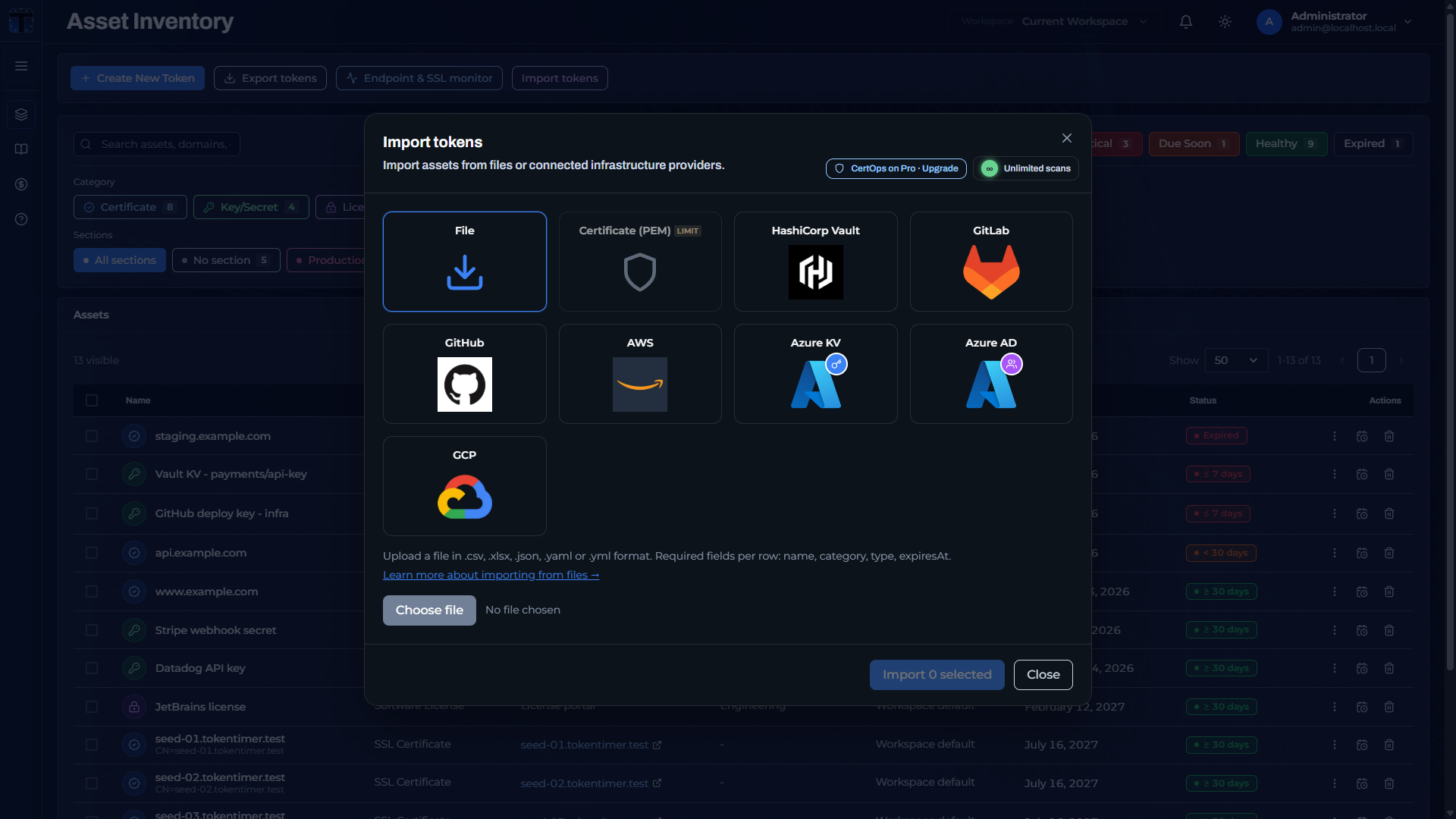 The Import tokens modal: file upload plus integration providers.
Formats and fields
Required fields:
name(3-100 characters),category,type
Optional fields:
expiresAt(formatYYYY-MM-DD, for example2026-12-31; if omitted ornull, defaults to Never expires, stored as2099-12-31)section,domains,location,used_by,contacts,description,notes,contact_group_id- Certificates:
issuer,serial_number,subject - Keys:
key_size(positive integer),algorithm - Licenses:
license_type,vendor,cost,renewal_url,renewal_date
The workspace is taken from your current selection, so the file does not include a workspace_id.
tip
Include a location column for reliable deduplication: re-importing a row with the same name + location updates the existing token instead of creating a duplicate.
CSV / XLSX example
name,category,type,expiresAt,section,domain,privileges,last_used
Example TLS Cert,cert,ssl_cert,2026-01-31,"prod, public",example.com,,
API Gateway Key,key_secret,api_key,2025-12-15,"prod, api",api.example.com,"read, write",2025-06-10
JSON example
[
  {
    "name": "Example API Key",
    "category": "key_secret",
    "type": "api_key",
    "expiresAt": "2026-05-15",
    "section": "backend, internal",
    "domain": "service.example.com",
    "privileges": "read:all, write:logs",
    "last_used": "2025-11-20"
  }
]
YAML example
tokens:
  - name: Example TLS Cert
    category: cert
    type: ssl_cert
    expiresAt: 2026-01-31
    section: prod, external
    privileges: 'read, sign'
    last_used: 2025-10-15
    domains:
      - example.com
      - www.example.com
    issuer: "Let's Encrypt"
    location: /etc/ssl/certs
    used_by: edge-proxy
Behavior on import
- Deduplication: rows matching an existing token on
name+locationupdate that token. See Automatic deduplication. - Alert catch-up: alerts for thresholds that have already passed are suppressed to prevent notification storms; alerting resumes at the next future threshold.
- No caps: self-hosted TokenTimer has no plan limits, so imports are not blocked by a token quota.